
Grief is a normal and natural reaction to the death of a loved one. Most of us are not prepared for the long journey of grief which is sometimes devastating, frightening, and often lonely. We may think, do, and say things that are very unlike us. There seems to be no end to the intense feelings that we experience.

Grief has been likened to a raw open wound. With great care it eventually will heal but there will always be a scar. Life will never be the same but eventually your grief will soften.

The elements of grief have been compared to enduring a fierce storm at sea. The waves are peaked and close together. Eventually the sea becomes calmer but occasionally the storm regroups, strengthening without any warning. For several hours, days or weeks you may not feel grief; then suddenly you meet someone or see something, or hear something, and grief resumes. It seems as if you are taking one step forward and two back.

Grief has its common and its unique sides. Although it is a universal experience, no two people grieve the same, even in the same family. Like a snowflake or a fingerprint, each person’s grief has characteristics all its own.
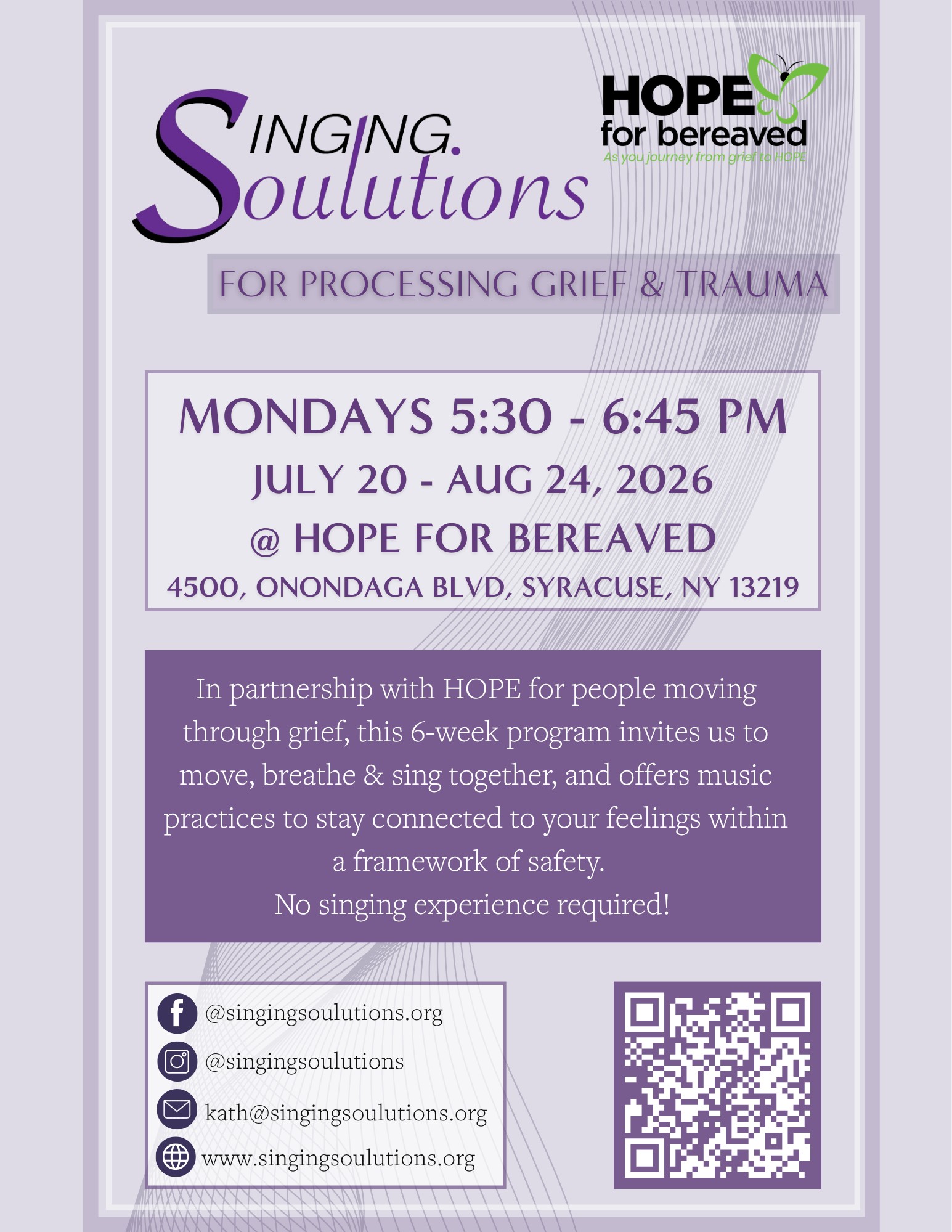

Our Individual Peer Grief Support offers a safe and confidential space for you and your family to explore your emotions and experiences of loss with a companion who understands firsthand the complexities of bereavement. Through personalized sessions tailored to your needs, our trained peer support staff provide empathic listening, practical coping strategies, and emotional support to help you navigate the grieving process with resilience.

Whether facing recent loss or navigating long-term grief, our one-to-one sessions offer you a nurturing environment to find strength on your journey toward reconciliation.

What to Expect:

To get started with Individual Peer Grief Support, please call us at 315-475-9675. One of our team members will speak with you, answer any questions you may have, and gather some basic information about your loss and support needs.

From there, we will match you with a member of our Peer Grief Support Team. To ensure the best possible support, we do need to speak directly with the person seeking services, though a family member, friend, or other support person is welcome to assist with the initial connection if needed.

Our Individual Peer Grief Support services are provided free of charge. Donations are always appreciated and help us continue offering support to grieving individuals and families throughout Central New York.

Our Peer Grief Support Groups provide a supportive community where you can share your grief experiences in a non-judgmental environment, while fostering empathy and connection among participants. Led by trained facilitators who have personally experienced loss, these groups offer a space for mutual support, encouragement, and the exchange of coping strategies, helping you navigate your grief journey with companionship and resilience. Typically suited for those further along in their grief journey, our Peer Grief Support Groups offer a sense of belonging and solidarity to all who seek comfort and healing.

Groups and schedules vary. Currently, we facilitate the following groups:

  • Beyond the Empty House (suited for widows 65+) – 12 weeks, every other Wednesday morning *next cohort will start in mid-September
  • Family & Friends (suited for anyone grieving any loss) – monthly, Tuesday evening
  • Suicide Loss (suited for anyone grieving a loss from suicide) – monthly, Wednesday evening
  • Bereaved Parents (suited for parents grieving miscarriage, stillborn, or infants) – monthly, Wednesday evening
  • Family & Friends (suited for anyone grieving any loss) – monthly, Friday morning/afternoon

What to Expect:

All of our Peer Grief Support Groups are closed groups, meaning participants must complete an intake before joining. This helps us ensure that each group is a good fit for your needs and creates a safe, supportive environment for everyone involved.

To get started, please call 315-475-9675. One of our team members will speak with you, answer any questions, and gather some basic information. From there, we will connect you with a member of our Peer Grief Support Team, who will help determine whether a support group is the right next step for you and discuss available group options.

Our Peer Grief Support Groups are offered free of charge. Donations are always appreciated and help us continue providing support to grieving individuals and families throughout Central New York.

In addition to our support groups, we provide a number of valuable resources to aid in the journey from grief to healing. These resources range from our HOPELine newsletter, which provides a bi-monthly package of self-help resources, to our blog posts that outline simple ways to cope with grief and help others cope as well.

For a list of other programs in the Central New York area from our partners and friends, or to find ways to get involved with HOPE for Bereaved, please visit our Programs Page.

To see a list of our community partners, please visit our Partners page.

We welcome your stories of coping, understanding, and growing through grief, to help others who are hurting. If you would like your story considered for publication, please email your entry.

HOPE for Bereaved, Inc. provides education for professionals interested in learning about grief and how to support the bereaved. The ideal attendee is currently working with, or may at some point work with, grieving people. Whether you’re a direct care staff working with a grieving client, or a manager interested in learning how to support your grieving staff, HOPE can help.

For more information or to discuss your particular needs, call HOPE at 315.475.9675.

HOPEline is HOPE for Bereaved’s bi-monthly newsletter created to support those who are grieving, connect our community, and keep partners and supporters informed about the work being done through HOPE.

Each issue features personal stories, insights from grief professionals, monthly reflections, and information on events and programs. Whether you are grieving, supporting someone who is, or involved in our mission, HOPEline is a resource to help you stay connected and informed.

To receive HOPEline by email or mail, or call us at (315) 475-9675.

Coming Soon

How does Grief Support work?

Unlike clinical or diagnostic approaches, peer grief support is rooted in mutual understanding. You connect with others through shared stories, exchanged coping strategies, and moments of recognition that remind you – your grief is valid.

  • Complements (Not Replaces) Clinical Therapy: Peer support does not diagnose or treat clinical issues. Instead, it supports your emotional, social, and practical healing.
  • Shared Lived Experiences: Our Peer Grief Support Team has “been there,” which reduces the emotional distance that can exist with a traditional clinician. Participants often say things to our Peer Grief Support Team they would never say to a therapist. Why? Because they feel understood on a human level – not evaluated.
  • Normalization of Feelings: When you hear “I felt that way too,” it diminishes the sense of isolation and shame that grief creates. This normalizing effect helps you realize you’re not “going crazy”, your reactions are valid, and your grief does not follow a neat timeline. This alone reduces anxiety and improves coping.
  • Hope Through Witnessing Others’ Progress: Our Peer Grief Support Team model recovery in a way that is both attainable and inspiring. Seeing someone further along creates hope (“If they survived this, maybe I can too.”), motivation to keep going, and a roadmap for coping.
  • Mutuality Instead of Hierarchy: Peer support removes the “expert-patient” dynamic, and instead is built on shared power, shared humanity, and shared responsibility in the conversation. This mutuality helps you open up more honestly and engage more deeply.
  • Practical Wisdom: Our Peer Grief Support Team offers real-world coping strategies, like what actually helps at 2am on a bad night, or how they navigated anniversaries, holidays, and social pressures. This lived wisdom is often exactly what you need but can’t get from clinical therapy alone.
  • Reduced Stigma & Increased Accessibility: You may feel hesitant, ashamed, or unready for therapy. Peer support can feel safer, more casual, and is a gentle first step in getting help.
  • Community Connection and Belonging: Grief is deeply isolating. Peer grief support reinforces that others truly “get it”, creates ongoing support networks, reduces loneliness, and helps you rebuild identity in community.

At its heart, our peer grief support model works because it recognizes grief as a human experience.